
How to Choose the Right Running Shoes – Physora Physio Guide
Learn how runners in Neath can choose the right running shoes to reduce pain, prevent injuries, and run more comfortably. Evidence‑based advice from Physora Physio’s sports physios.
Paul Antony
4/27/20266 min read
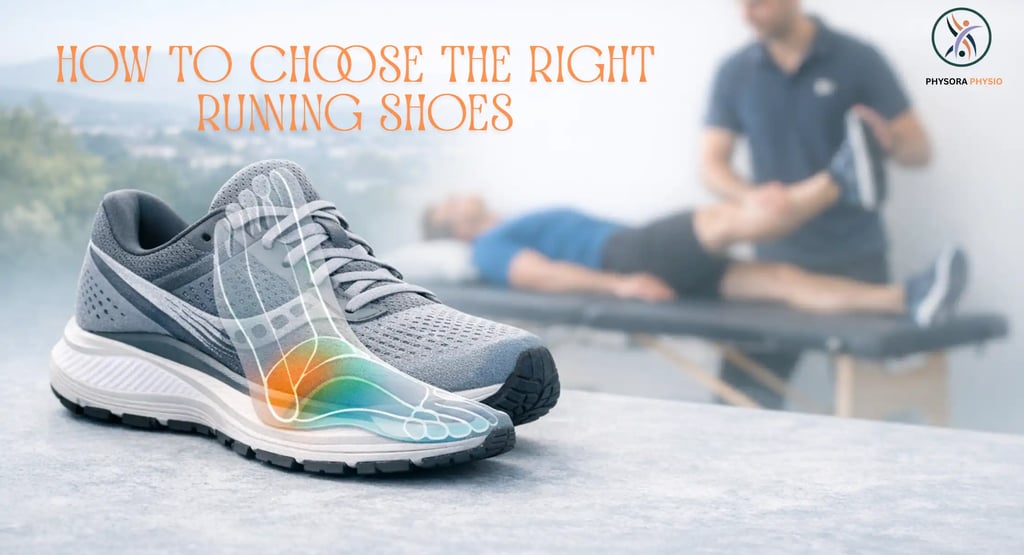
You start running because you want to feel better. Fitter. Stronger. Clearer in your mind.
For many runners in Neath and the surrounding areas, running is a way to manage stress, improve fitness, and build resilience. But when pain starts, it can quickly erase the joy.
But then it starts.
The shin pain after 10 minutes. The aching knee on hills. The sore heel every morning after a run.
Most runners assume they need more motivation, more stretching, or more expensive shoes.
Often, the real answer is simpler: you may be wearing running shoes that don’t suit your body, training load, or running style.
At Physora Physio in Neath, we help runners understand pain, improve biomechanics, and return to running with confidence using evidence‑based sports physiotherapy.
Here’s how to choose the right running shoes the smart way.
Why Running Shoes Matter (But Not in the Way Most People Think)
Running places repeated load through the body. Peak forces can reach around 2–3 times body weight with each step, depending on speed, surface, and technique.
Your running shoes act as the interface between your body and the ground. They can influence:
Comfort
Confidence
Perceived effort
Load distribution through your legs and feet
Grip and stability
Tolerance to training volume
But shoes are not magic. Research consistently shows running injuries are usually multifactorial involving training load, recovery, strength, tissue capacity, sleep, previous injury, and sometimes footwear.
That means the goal is not to find a “perfect shoe.”
It is to find the right running shoes for you shoes that support your running style, reduce unnecessary stress, and help prevent running injuries.
Start With Comfort — Not Brand Hype
One of the strongest modern concepts in footwear research is that runners often perform best in shoes that feel naturally comfortable.
This is linked to the “preferred movement path” model, where the body tends to choose movement strategies that reduce unnecessary stress and improve efficiency.
In simple terms: if a shoe feels awkward, heavy, unstable, or irritating, your body usually knows before the science catches up.
At Physora Physio, we often tell runners that the best running shoes for beginners and experienced runners are the ones that feel comfortable and suit your body.
When trying on shoes, ask:
Do they feel comfortable immediately?
Could I run in these today?
Do they feel smooth and natural underfoot?
Is there any rubbing or pressure on your heels, midfoot, or toes?
If they feel wrong in the shop, they rarely feel better at mile three.
Trust your comfort as much as brand names and marketing.
Understand the Main Shoe Categories
Choosing the right running shoes starts with understanding the main categories. Your sports physio can help you decide which type suits your biomechanics and running goals.
Neutral Running Shoes
Often suitable for many runners. Designed without added medical support features.
Good for runners with a neutral gait or those who prefer a flexible, natural feel.
Stability Shoes
May suit runners who feel unstable or less controlled when fatigued, or who have a tendency to collapse through the arch.
These shoes add guided support to help manage load and reduce strain on the knees and shins.
Cushioned Shoes
Popular for longer road runs and comfort‑focused mileage.
They can help soften the impact for runners who develop shin splints, foot pain, or joint discomfort.
Lightweight / Race Shoes
Often used for faster sessions or events.
They can improve running economy in some runners, but are not always ideal for everyday training or high‑mileage runners.
Trail Shoes
Built for grip, traction, and protection on uneven terrain.
If you run on paths, trails, or muddy surfaces around Neath, trail running shoes help you stay stable and reduce ankle strain.
Important: Research does not support one shoe category as best for everyone.
Individual response matters more than labels. The right running shoes for you may be different from what your friend finds comfortable.
Get the Fit Right
Even an excellent pair of running shoes can become a problem if the fit is poor.
Footwear that’s too tight or too loose can contribute to blistering, numbness, forefoot pain, and even knee or hip discomfort.
Use this fit checklist when choosing running shoes:
Around a thumb‑width of space in front of the toes
Secure heel hold with minimal slipping
Snug midfoot without squeezing or pinching
Toes can spread naturally
No numbness, rubbing, or pressure spots
Feet often swell during longer runs, so avoid buying shoes that feel tight at rest.
If you’re unsure, a sports physio in Neath can assess your foot shape and help you choose running shoes that match your mechanics.
Respect Gradual Change
A common mistake among runners is switching suddenly to a very different shoe—more minimal, more cushioned, different heel drop, or much stiffer.
Even good changes can overload tissues if introduced too quickly.
If you’re changing shoe type or brand:
Start with shorter runs
Alternate with your old pair initially
Monitor calves, feet, and knees
Progress gradually over 2–4 weeks
The body adapts best when load changes are managed progressively.
This simple strategy can help prevent Achilles irritation, shin pain, and plantar heel pain after switching running shoes.
Shoes Help — But Capacity Wins
Many runners chase new gear while ignoring the real issue: the body’s ability to tolerate load.
For example:
Weak calves may contribute to Achilles pain
Reduced hip strength may affect runner’s knee and patellofemoral pain
Sudden mileage spikes may trigger shin splints
Poor recovery can amplify soreness and delay healing
This is why buying another pair of running shoes sometimes changes nothing.
At Physora Physio, we assess:
Strength deficits
Running‑related pain
Mobility restrictions
Training errors
Footwear choices
Return‑to‑run planning
That gives you a personalised plan based on evidence, not guesswork.
We can help you choose the right running shoes as part of a broader strategy to reduce running injuries and build resilience.
A Common Runner Story
A fictional example:
James trained for a half marathon and developed recurring knee pain. He had already bought two new pairs of shoes trying to solve it.
Assessment showed a rapid mileage increase, low single‑leg strength, and shoes that felt unstable for him.
We adjusted his load, improved his strength, refined his progression, and guided him toward running shoes that felt more comfortable and supportive.
He returned to training confidently, with fewer flare‑ups and better control.
Patient story is a fictional example created for educational purposes, based on common sports physiotherapy scenarios.
When Should You Replace Running Shoes?
A practical guideline is around 300–500 miles (480–800 km), though this varies by runner, surface, and shoe type.
Replace running shoes sooner if you notice:
New unexplained aches or pains
Flattened cushioning or “dead” feeling underfoot
Uneven outsole wear
Reduced grip on wet or slippery surfaces
Loss of stability or comfort
Your body often notices worn shoes before your eyes do.
Regular runners in Neath are encouraged to mark their start date or mileage so they can track when it’s time for a new pair.
When to See a Sports Physio
Book an assessment with a sports physiotherapist if you have:
Pain during or after runs
Recurrent shin splints
Achilles pain or tightness
Runner’s knee or patellofemoral pain
Plantar heel pain or plantar fasciitis‑like symptoms
Repeated setbacks after changing running shoes
Early treatment usually means faster recovery, fewer missed runs, and better long‑term performance.
If you’re unsure whether your running shoes are contributing to your pain, a physio can help you evaluate your footwear choices and biomechanics.
Why Choose Physora Physio in Neath?
We combine clinical reasoning, modern sports rehab, and practical coaching to help runners recover and perform.
At Physora Physio:
We don’t rely on generic sheets or outdated myths.
We don’t give one‑size‑fits‑all advice.
We give you clear answers and a plan that works in real life, tailored to your goals, running style, and injury history.
Whether you’re a beginning runner or training for a marathon, our sports physios in Neath can help you choose the right running shoes and reduce your risk of running injuries.
👉 Ready to Run Without Guesswork?
Book your appointment with Physora Physio in Neath today:
FAQ: Choosing Running Shoes
What running shoe is best for beginners?
Usually the best running shoes for beginners are the shoes that feel most comfortable, fit well, and suit your running surface. If you’re unsure, a sports physio in Neath can help you match your foot type and running style with the right shoe.
Do I need stability shoes if I overpronate?
Not always. Pronation is a normal movement, not automatically a problem. Comfort, symptoms, and control matter more than the “stability shoes for overpronation” label. Many runners find that neutral or cushioned shoes work perfectly well.
Can running shoes cause knee pain?
Running shoes can contribute in some cases, especially if poorly tolerated or changed suddenly, but knee pain is usually multifactorial. Load, strength, technique, and previous injury often play a bigger role than footwear alone.
How often should I replace running shoes?
Commonly around 300–500 miles (480–800 km), but monitor comfort and wear rather than mileage alone. If you notice new aches, lost cushioning, or uneven wear, it’s time to replace your running shoes.
Can a physio help me choose shoes?
Yes. A sports physiotherapist can assess your pain, biomechanics, training load, and goals to guide better decisions about running shoes. At Physora Physio, we integrate footwear advice into a complete plan for injury prevention and performance.


Copyright © 2025 Physora Physio
Useful links
PHYSORA PHYSIO
Expert Physiotherapy.
Elite Performance
Get in Touch
Treatments
Plan Your Visit
About Us
Insights