
Shin Splints After Running? Here’s What Your Legs Are Really Trying to Tell You (And How to Fix It Fast)
Paul Antony
3/2/20264 min read
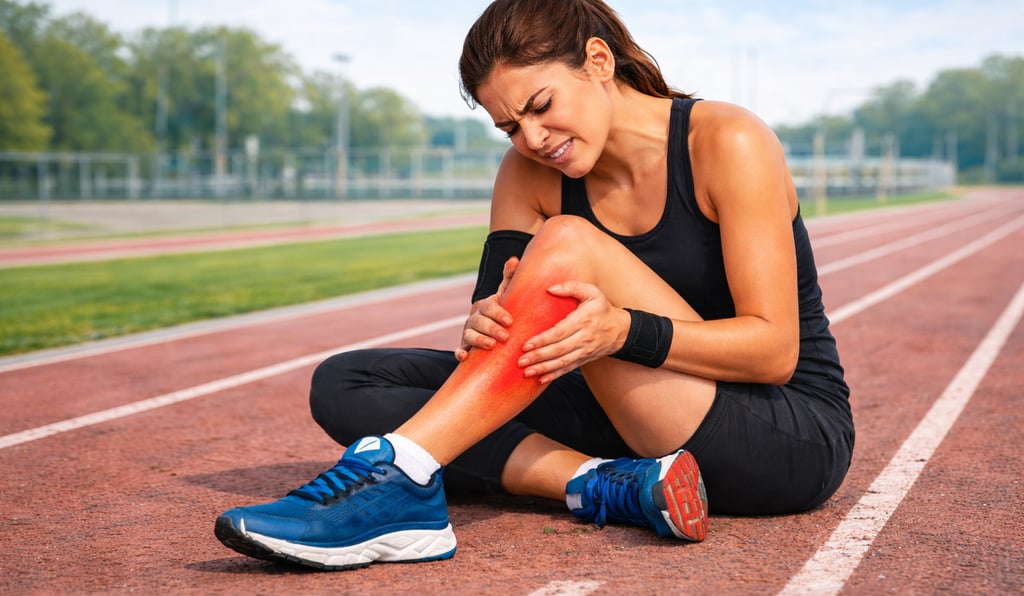

You finish a run feeling proud… until later that day when your shin starts to ache.
At first, it’s subtle.
A “tight” feeling.
A dull throb.
Then suddenly, even walking down the stairs feels like your leg is punishing you for doing something healthy.
If you’ve ever Googled “shin splints after running” at 11 pm with an ice pack wrapped around your lower leg… you’re not alone.
And here’s the good news: shin splints are common, treatable, and preventable — when you address the real cause.
At Physora Physio in Neath, we see runners every week who think they “just need to rest”… when what they actually need is a smarter plan.
What Are Shin Splints (Really)?
Shin splints are the everyday term for Medial Tibial Stress Syndrome (MTSS).
In plain English:
It’s pain caused by overload and irritation of the bone and tissues along the inner edge of your shin (tibia).
It usually feels like:
A dull ache along the inner shin
Pain that starts during or after running
Tenderness when you press the area
Tight calves
Pain that worsens as mileage increases
Shin splints aren’t “just inflammation.” They’re a warning sign.
Your body is telling you:
“I can’t handle this load… with the way you’re currently running.”
Why Shin Splints Happen After Running (The Real Cause)
Most runners assume shin splints happen because they:
Ran too far
Ran too fast
Need better shoes
Sometimes that’s part of it.
But in sports physiotherapy, shin splints are usually a load + biomechanics problem.
The most common reasons we see:
1) Your calves are doing too much work
If your calf muscles are weak or fatigued, your tibia absorbs more stress.
2) Your foot and ankle mechanics are collapsing under load
Excessive pronation (rolling in) isn’t always “bad” — but if you can’t control it, your shin pays the price.
3) Your training ramped up too quickly
This is the classic trigger:
New runners
Returning after time off
“I signed up for a 10K” motivation surge
Your fitness improves faster than your bone and connective tissue tolerance.
4) You’re running with a stride pattern that increases tibial stress
Overstriding, heavy heel striking, and low cadence can increase repetitive load through the shin.
5) You’ve got hidden strength deficits
Weak glutes and hips can lead to poor leg alignment and increased tibial rotation — a huge shin splints contributor.
The Sneaky Progression: Why Shin Splints Keep Coming Back
One of the most frustrating parts of shin splints is this cycle:
You rest → pain eases → you run again → pain returns.
That happens because rest alone doesn’t improve:
Strength
Control
Load tolerance
Running mechanics
So the moment you return to running… the same tissues get overloaded again.
A Runner’s Story (Fictional Example)
Sarah, a 34-year-old recreational runner, started training for her first half-marathon. She felt amazing in week one.
By week three, she noticed aching in her shin after runs.
She ignored it.
By week five, she couldn’t finish a 5K without pain.
She tried:
Ice
Compression sleeves
Better shoes
Full rest
But the pain kept returning.
When she came to Physora Physio, her assessment showed:
Reduced calf strength
Poor single-leg control
Low hip stability
Training load is increasing too fast
Her fix wasn’t stopping running forever.
It was a progressive rehab + smart return-to-run plan.
The patient's story is a fictional example created for educational purposes, based on common physiotherapy scenarios.
How to Treat Shin Splints After Running (What Actually Works)
Let’s make this practical.
Step 1: Reduce load (without losing fitness)
You don’t always need full rest.
Better options include:
reducing mileage
avoiding hills temporarily
swapping one run for cycling/rowing
splitting long runs into shorter sessions
The goal is:
Keep your body moving while reducing the painful stress.
Step 2: Strengthen the real weak links
Evidence-based rehab for shin splints often includes:
Calf strengthening (especially soleus)
Tibialis anterior strengthening
Foot intrinsic control
Hip and glute stability work
Because shin splints aren’t just a shin problem — they’re a chain problem.
Step 3: Fix the running mechanics that overload your shin
This is where physiotherapy becomes a game-changer.
Small changes can reduce tibial stress significantly, such as:
increasing cadence slightly
reducing overstride
improving trunk control
strengthening for better landing mechanics
Step 4: Return to running progressively (the missing step)
This is where most runners fail — not because they’re lazy, but because nobody gave them a plan.
A structured return-to-run might look like:
Run/walk intervals
Gradual weekly increases
Pain monitoring rules
Strength work alongside running
When Shin Splints Could Be Something More Serious
Sometimes “shin splints” aren’t shin splints.
If you have:
Sharp pain in one specific spot
Pain that worsens even with rest
Night pain
Pain with hopping
Swelling or redness
…it could indicate a stress fracture or other issue.
That’s why getting assessed early matters.
How Physora Physio Helps Runners in Neath
At Physora Physio, we don’t just tell you to “rest and stretch.”
We look at:
Your training history
running biomechanics
calf capacity
hip and foot control
mobility and tissue load tolerance
Then we build a plan to:
✅ reduce pain
✅ rebuild strength
✅ restore confidence
✅ get you back running without recurrence
Quick Self-Check: Should You Book a Physio Assessment?
If you relate to any of these, it’s time:
You’ve had shin pain for more than 7–10 days
It keeps returning every time you run
You’re training for an event
You’re unsure whether it’s a stress fracture
You want to run pain-free long-term
FAQs
How long do shin splints last?
Mild shin splints can settle in 1–3 weeks with correct load management. Persistent cases can last 6–12 weeks if the root cause isn’t addressed.
Should I run with shin splints?
Sometimes you can continue with modified running if pain is mild and not worsening — but pushing through often delays healing. A physio can guide safe progression.
Do compression sleeves help shin splints?
They may reduce symptoms temporarily, but they don’t fix the underlying load and strength issues.
Are shin splints caused by flat feet?
Not directly. Foot posture alone rarely causes shin splints — but poor control and strength can contribute.
What stretches help shin splints?
Calf stretching may ease tightness, but strengthening is usually more important than stretching for long-term recovery
Ready to Run Without Shin Pain?
If shin splints are stopping you from training, don’t wait until they become a stress fracture.
👉 Book a running injury assessment with Physora Physio and get a clear plan to return to running safely and confidently.
https://physoraphysio.com/physio-in-neath-appointments
Physora Physio — trusted sports physiotherapy support in Neath.


Copyright © 2025 Physora Physio
Useful links
PHYSORA PHYSIO
Expert Physiotherapy.
Elite Performance
Get in Touch
Treatments
Plan Your Visit
About Us
Insights