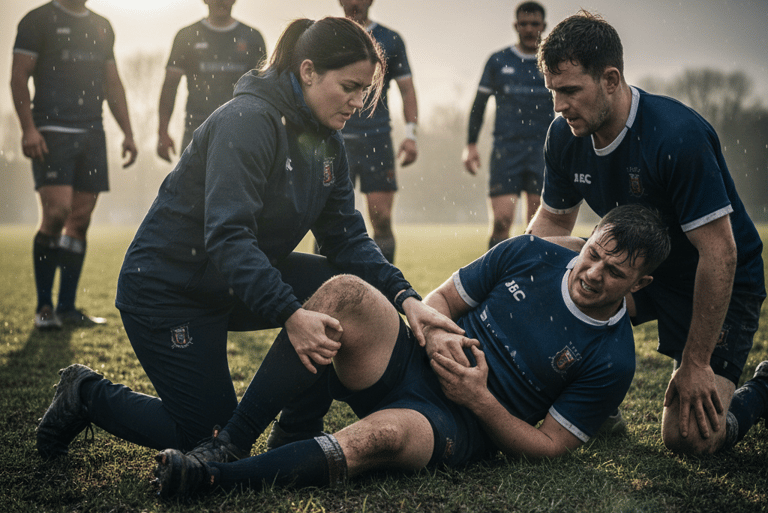
Have Sports Injuries Put Your Training on Pause?
If an injury is keeping you away from the activities you love, the right support can help you move forward with confidence. At Physora Physio, we focus on helping active individuals recover, rebuild strength, and return to their sport with a clear plan for long-term performance and injury prevention.
Sports-related injuries are extremely common, with millions of cases reported each year. Research highlights how structured, evidence-based rehabilitation plays a key role in recovery by creating personalized programs that match each person’s goals, activity level, and specific condition.
Our specialists work to restore movement, improve flexibility, reduce discomfort, and lower the risk of repeat injuries. We frequently support recovery from issues such as sprains, muscle strains, tendon irritation, and stress-related injuries caused by repetitive activity.
Many injuries stem from factors like overtraining, limited conditioning, skipping proper warm-ups, incorrect technique, or using unsuitable gear. At Physora Physio, we help uncover these root causes and guide you through a tailored recovery and prevention strategy designed for lasting results.
Visit Physora Physio to start a focused, results-driven recovery journey that not only addresses your current injury but also helps you stay stronger and more resilient for the future.
Common Sports Injuries
Athletes and active individuals often face a wide range of injuries that can vary in intensity and duration, from sudden acute issues to long-term, ongoing conditions. Understanding these problems can help you take early action, spot warning signs, and seek effective, professional care from a trusted provider like Physora Physio.
Some of the most frequently seen sports-related injuries include:
Sprains: These involve stretching or tearing of ligaments—the strong bands of tissue that connect bones at a joint. They commonly affect the ankles, knees, and wrists and may cause pain, swelling, and limited joint movement.
Strains: Strains occur when muscles or tendons (the tissues linking muscles to bones) are overstretched or torn. They often appear in the legs or lower back and can lead to discomfort, swelling, and muscle tightness or spasms.
Fractures: A fracture is a break in the bone, which can range from small cracks to complete breaks. These injuries are usually the result of high-impact activities or direct trauma and may present with significant pain, swelling, and visible changes in shape.
Dislocations: This happens when a bone is forced out of its normal position within a joint, leading to intense pain, swelling, and restricted movement. The shoulder, elbow, and fingers are commonly affected.
Tendinitis: This condition involves inflammation of a tendon, often caused by repetitive motion or overuse. It frequently impacts areas such as the Achilles tendon, shoulder, or knee and can result in stiffness, tenderness, and swelling.
Concussions: A concussion is a form of brain injury triggered by a strong impact or sudden movement of the head and upper body. Symptoms may include headaches, dizziness, confusion, and memory challenges.
At Physora Physio, our recovery-focused care is designed to support healing, restore movement, and help you return to activity with greater strength and confidence. Get in touch today to book a consultation and take the first step toward a safer, more effective recovery plan.
How Therapy Helps You Get Back in the Game
Recovering from a sports injury requires more than just rest—it takes expert guidance and a structured recovery plan to help you move, train, and compete with confidence again. At Physora Physio, our specialists focus on building a personalized, evidence-based approach that supports faster recovery and long-term performance, so you can return to the activities you love feeling stronger and more prepared.
Your first session begins with a detailed review of your medical background and injury history to understand any underlying factors that may influence your progress. We then assess your strength, flexibility, and range of motion using precise measurements to pinpoint areas that need improvement.
From there, our team conducts functional movement screenings to uncover movement patterns or biomechanical imbalances that may have contributed to the injury or could slow your recovery. Sport-focused testing allows us to evaluate how your body performs in real-life activity and set clear benchmarks for progress.
Proven, research-backed techniques are selected based on your condition, goals, and activity level, which may include:
Manual techniques: Hands-on methods such as joint and soft tissue mobilization and myofascial release to improve mobility, reduce discomfort, and encourage tissue healing.
Targeted exercise programs: Customized routines designed to rebuild strength, flexibility, stability, and overall performance. These are commonly used to support recovery from muscle, ligament, and tendon-related injuries.
Functional strengthening: Exercises that focus on the key muscle groups required for your specific sport or activity.
Agility and coordination drills: Training that enhances balance, speed, and control—essential elements for many athletic movements.
Sport-specific skill training: Incorporating real game or activity skills into your recovery plan to help you regain confidence and technical ability while improving physical readiness.
Each strategy is adapted to your unique needs and reinforced both in-clinic and through guided home programs to ensure steady, measurable progress.
Connect with Physora Physio today to begin a personalized recovery journey designed to restore movement, build resilience, and help you return to sport with confidence and strength. Call 07356220200 today.
Get in touch


Powered by Physora Physio
Copyright © 2025 Physora Physio