
Knee Replacement Recovery for Seniors: A Gentle Step-by-Step Guide
Caring for an elderly loved one after total knee replacement? Learn what to expect, safe exercises, and how physiotherapy at Physora physio in Neath supports a safe, steady recovery.
Paul Antony
7/6/20265 min read
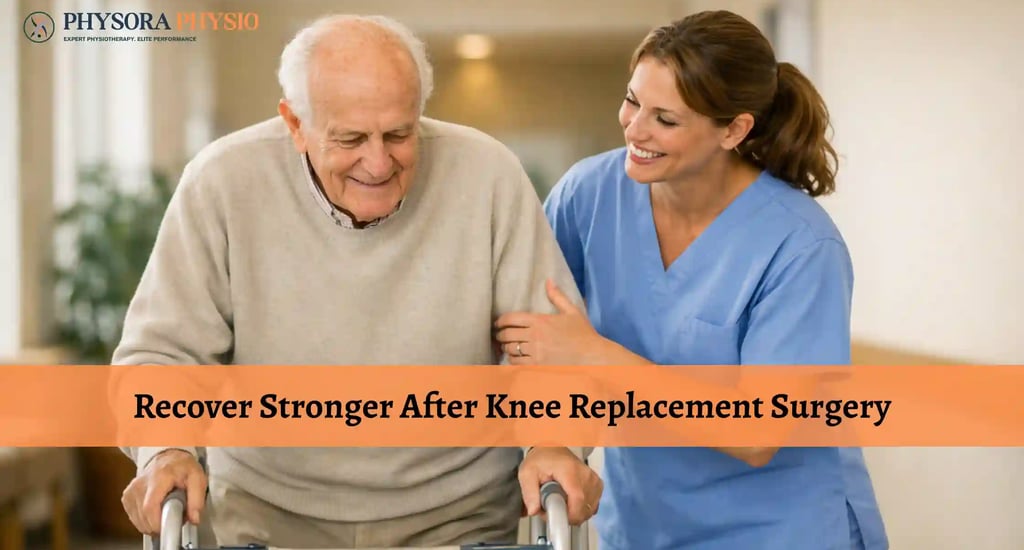
Rehab After Total Knee Replacement: A Gentle Guide for Seniors and Their Families
A few days after his knee replacement surgery, 78-year-old Mr Reddy sat at the edge of his bed, unsure if he'd ever feel steady on his feet again. The pain had eased, but a new kind of worry had taken its place. Would he be able to walk to the kitchen on his own? Would he need help for the rest of his life?
If you or someone you love is recovering from total knee replacement surgery later in life, this feeling is completely normal. Recovery after this surgery is a journey, and for older adults, it's a journey that deserves a gentler, more patient approach. At Physora physio in Neath, we walk alongside elderly patients and their families through every step of this process, so that confidence, not fear, leads the way back to everyday life.
Meet Mr Reddy: Finding His Confidence Again After Knee Surgery
Mr Reddy lived alone in Neath and had been managing severe knee arthritis for years before finally undergoing a total knee replacement. In the early days after surgery, simple tasks like standing up from a chair or walking to the bathroom felt overwhelming. His daughter, worried about his safety, reached out to Physora physio for guided physiotherapy support.
Over the following weeks, a physiotherapist worked with Mr Reddy at a pace suited to his body, gentle exercises, careful walking practice, and plenty of encouragement along the way. By week ten, Mr Reddy was walking to his garden each morning, using his walking stick with confidence rather than fear. His story is a reminder that with the right support, recovery doesn't have to be frightening; it can be empowering.
The patient's story is a fictional example created for educational purposes, based on common physiotherapy scenarios.
What Happens to the Knee During Replacement Surgery?
During a total knee replacement, the damaged surfaces of the knee joint are removed and replaced with an artificial implant made of metal and plastic components. This procedure relieves pain caused by severe arthritis and restores movement that has often been lost over many years.
While the surgery itself addresses the joint, the muscles, tendons, and nerves around the knee still need time and careful rehabilitation to relearn how to move safely and confidently, and this is where physiotherapy plays an essential role, particularly for older adults.
Why Recovery Looks Different for Older Adults
Recovery after knee replacement is not one-size-fits-all. For elderly patients, several factors shape a safe and realistic recovery plan, and current clinical guidance emphasises individualised pacing rather than rigid timelines (Australian Commission on Safety and Quality in Health Care, Knee Replacement Clinical Care Standard, 2021).
• Muscle strength and balance often take longer to rebuild than in younger patients
• Other health conditions, such as heart or lung issues, may affect exercise tolerance
• Fear of falling can understandably slow the return to walking and daily activity
• Bone healing and tissue recovery may progress more gradually with age
• Family and caregiver support plays a much larger role in day-to-day recovery
None of this means recovery is less successful for older adults — it simply means the path looks different, and that's exactly why a tailored physiotherapy approach matters so much.
What to Expect in the First Few Weeks
• Days 1-3: Gentle movement begins, often with a walking frame, focusing on standing and short steps
• Week 1-2: Swelling and discomfort are common; short, supervised walks and seated exercises are introduced
• Week 3-6: Walking distance gradually increases; many patients progress from a frame to a stick
• Week 6-12: Strength and confidence continue to build; some patients return to light household activities
• Beyond 3 months: Continued improvement in strength, balance, and stamina, often up to 12 months
Every patient's timeline is different, and these stages are general guidance — your physiotherapist will tailor your specific pace of progress.
Gentle Exercises That Help (and What to Avoid)
Evidence-based rehabilitation after total knee replacement focuses on restoring gentle movement, muscle strength, and confidence — not intense exercise (Royal Australian College of General Practitioners, Knee Osteoarthritis Clinical Care Standard, 2018; updated rehabilitation guidance 2022).
Helpful, Gentle Movements
• Seated knee bends and straightening exercises
• Gentle ankle pumps to support circulation
• Supported standing and weight shifting
• Short, supervised walking practice
• Sit-to-stand practice from a stable chair
What to Avoid Without Guidance
• Kneeling or deep squatting in early recovery
• Twisting the knee while the foot is planted
• Walking on uneven or slippery surfaces without supervision
• Pushing through sharp or worsening pain
• Skipping prescribed exercises out of fear of pain
Walking Aids and Safe Movement at Home
Most elderly patients progress through a sequence of walking aids — typically a frame, then a stick, as strength and balance improve. A physiotherapist will guide the right aid and timing for each stage, ensuring safety is never compromised for speed.
• Use the prescribed walking aid correctly and consistently in the early weeks
• Remove loose rugs and clutter from walking paths at home
• Ensure adequate lighting, especially at night
• Install grab rails in the bathroom and near steps where needed
• Wear supportive, non-slip footwear at home
Preventing Falls During Recovery
Falls are one of the most significant risks during knee replacement recovery in older adults. The World Health Organisation identifies fall prevention as a critical priority for elderly post-surgical patients (WHO Falls Prevention in Older Age, 2021 update).
• Always use prescribed walking aids, even for 'short' distances
• Take your time when standing up pause before walking
• Keep frequently used items within easy reach to avoid overreaching
• Ask for help with tasks that involve bending, lifting, or reaching overhead
• Attend physiotherapy sessions consistently to build balance and strength safely
The Role of Physiotherapy in a Safe Recovery
At Physora physio in Neath, our physiotherapy approach for elderly knee replacement patients is built around safety, patience, and steady progress. Your care may include:
• A gentle, individualised assessment of strength, balance, and mobility
• Supervised exercises paced to your comfort and energy levels
• Walking practice with the appropriate aid for your stage of recovery
• Fall-risk assessment and home safety guidance
• Clear communication with you and your family throughout the process
• Home-visit physiotherapy options where travel to the clinic is difficult
How Family Members and Caregivers Can Help
• Encourage (but never rush) prescribed exercises and walking practice
• Help keep the home environment free of trip hazards
• Attend physiotherapy sessions when possible to understand the home exercise plan
• Watch for signs of pain, fatigue, or low mood and share these with the care team
• Celebrate small milestones they matter more than they may seem
Warning Signs That Need Medical Attention
• Increasing redness, warmth, or swelling around the knee
• Fever or feeling generally unwell
• Sudden, severe pain that wasn't present before
• Calf swelling, redness, or pain (possible blood clot warning sign)
• Wound discharge or the wound reopening
If any of these occur, contact your surgeon or healthcare provider promptly rather than waiting for your next physiotherapy session.
When Will Daily Life Feel Normal Again?
Many elderly patients find that simple daily tasks, such as getting dressed, moving around the home, and short walks outside, begin to feel manageable again within 8-12 weeks, with continued gains in strength and confidence over the following months. Recovery is rarely a straight line, and that's completely normal. What matters most is steady, supported progress at a pace that respects your body.
Frequently Asked Questions
How long does knee replacement recovery take for elderly patients?
Most patients regain basic mobility within 6-12 weeks, with continued improvement in strength and confidence for up to 12 months. Pace varies based on overall health and prior fitness level.
Is it normal to still have some pain months after surgery?
Mild swelling or discomfort, especially with activity, can persist for several months and is generally part of normal healing. New or worsening pain should always be reviewed by your care team.
Can a frail or very elderly person still benefit from physiotherapy?
Yes. Physiotherapy can be safely adapted for frail or very elderly patients, focusing on gentle, supervised movement that builds strength and confidence at a comfortable pace.
If you or a loved one is recovering from knee replacement surgery, you don't have to navigate it alone. Book a gentle, guided physiotherapy assessment with Physora physio in Neath, including home-visit options, and take the next step toward safe, confident movement


Copyright © 2025 Physora Physio
Useful links
PHYSORA PHYSIO
Expert Physiotherapy.
Elite Performance
Get in Touch
Treatments
Plan Your Visit
About Us
Insights