
3 Mistakes Causing Shoulder Pain During Bench Press (And How to Fix Them)
Struggling with shoulder pain during bench press?See 3 common mistakes, why they happen, and how to fix them to train safely and pain-free.
Paul Antony
4/13/20263 min read
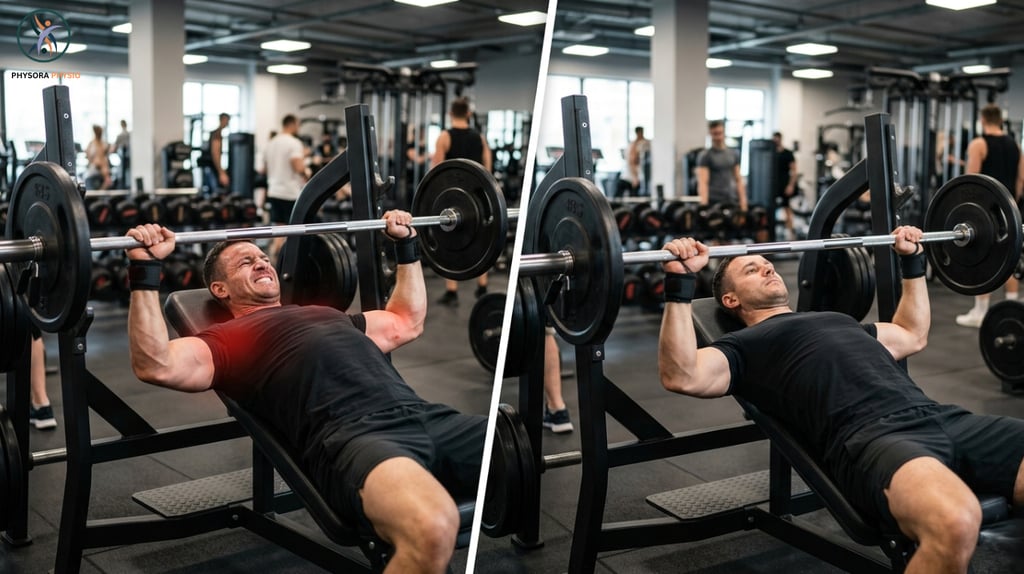

3 Mistakes Causing Shoulder Pain During Bench Press
If you’ve been experiencing shoulder pain during bench press, you’re not alone.
It’s one of the most common issues we see in people who train regularly. The frustrating part? Most people take rest, try again, and the pain just comes back.
That’s because the problem usually isn’t just overuse, it's how you’re pressing.
Today we’ll break down the 3 most common mistakes causing shoulder pain during bench press, and more importantly, how to fix them before it turns into a long-term injury.
Why Does Shoulder Pain Happen During Bench Press?
Why does my shoulder hurt when bench pressing?
In most cases, it comes down to:
Poor shoulder positioning
Incorrect elbow angle
Wrong bar path
These might seem like small issues, but over time they place repeated stress on the shoulder joint especially the front part of the shoulder.
This is exactly how minor discomfort turns into persistent pain.
Mistake 1: Elbows Flaring Out Too Wide
One of the biggest causes of bench press shoulder pain is flaring your elbows out too much.
If your arms are forming a straight “T” shape when viewed from above, your shoulders are taking on more load than they should.
Why this causes pain
This position compresses the structures in your shoulder and can lead to irritation over time.
How to fix it
Keep your elbows slightly tucked (around 45–70°)
Focus on a more controlled, stable movement
This small adjustment alone can significantly reduce shoulder pain during bench press.
Mistake 2: Poor Shoulder Blade Positioning
Another common issue is not setting your shoulders properly before lifting.
Many people lie flat on the bench and press without thinking about shoulder stability.
What’s happening
Your shoulders roll forward during the lift, which reduces support and increases strain on the joint.
Why it matters
Your shoulder is naturally unstable. Without proper positioning, it has to work harder to control the weight.
How to fix it
Pull your shoulder blades back and down before lifting
Keep your chest slightly lifted
Maintain this position throughout the movement
This is one of the most overlooked aspects of proper bench press technique, and correcting it can make an immediate difference.
In fact, this is something we often address early when treating gym-related shoulder injuries, as it directly impacts long-term shoulder health.
Mistake 3: Incorrect Bar Path
This is the mistake most people don’t realize they’re making.
If the bar is coming too high up toward your neck, you’re placing unnecessary stress on your shoulders.
Why this causes shoulder pain
It shifts the load away from your chest and puts more pressure on the front of the shoulder.
How to fix it
Lower the bar to your mid or lower chest
Keep the movement controlled
Avoid bouncing the bar
Even a slight correction in the bar path can completely change how your shoulders feel during and after your workout.
The Real Reason Your Pain Isn’t Going Away
It’s not just about one mistake it’s about repeating small errors under load, over time.
That’s why even after fixing your form, the pain might still be there.
Other contributing factors include:
Weak rotator cuff muscles
Tight chest muscles
Poor shoulder mobility
How to Fix Shoulder Pain from Bench Press (Properly)
If you’re dealing with ongoing discomfort, here’s what you should focus on:
Reduce weight temporarily
Prioritize correct form over heavy lifting
Strengthen your shoulder and upper back muscles
Improve mobility where needed
If your shoulder pain during bench press isn’t improving, it’s better to address it early rather than training around it.
At this stage, a structured approach like targeted physiotherapy for shoulder pain can help identify the exact cause and fix it properly.
Fix This Now Before It Gets Worse
Most bench press-related injuries don’t happen suddenly; they build up gradually.
The good news is, they’re also very fixable when you catch them early.
By correcting these 3 mistakes and paying attention to your movement, you can train without pain and avoid long-term issues.
If you’re dealing with shoulder pain or a gym-related injury, feel free to message to arrange an assessment.


Copyright © 2025 Physora Physio
Useful links
PHYSORA PHYSIO
Expert Physiotherapy.
Complete Recovery
Get in Touch
Treatments
Plan Your Visit
About Us
Insights